
Integrating Infrastructure with Landscape
Bundamba Advanced Water Treatment Plant
Bundamba | Queensland | Australia

project team
Client | Queensland Government
Project Manager | Black & Veatch
Builder | Thiess
Shire | Ipswich City Council
enhancing the western corridor water treatment plant
In a world where infrastructure dominates our urban landscapes, thoughtful landscape architecture plays a crucial role in enhancing and protecting the surrounding environment. The Western Corridor Recycled Water Project, managed by Black & Veatch and Thiess on behalf of the Queensland Government, exemplifies how infrastructure and landscape design can work together to create a more harmonious and sustainable outcome.
Located alongside a vital waterway corridor and adjacent to a residential community, the water treatment plant required a strategic landscape solution to mitigate its impact on the surrounding area. The design carefully balanced functionality with aesthetics, ensuring that both environmental and community needs were met.
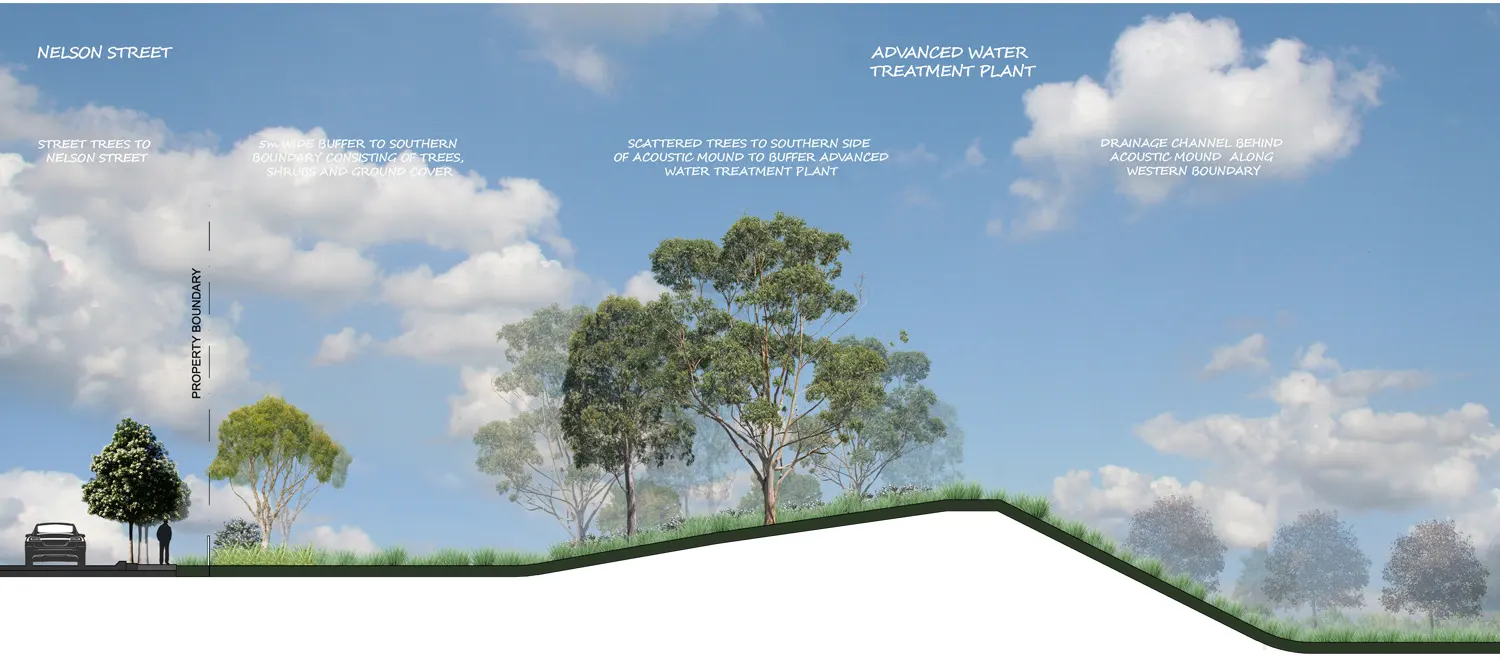
A key objective of the landscape architecture was to soften the plant’s visual presence and minimize noise for neighbouring residents. This was achieved through the creation of a large, heavily vegetated acoustic mound. Planted with a diverse mix of native species, this green buffer not only absorbs sound but also enhances the natural character of the area, seamlessly integrating the facility into its surroundings.
By prioritizing environmental sensitivity and community well-being, the landscape design transforms essential infrastructure into a thoughtfully integrated element of the urban fabric, setting a benchmark for future projects.
landscape elements – character and intent
The landscape design for this project was guided by a clear vision to enhance the surrounding environment while mitigating the visual and acoustic impacts of the infrastructure. Key landscape objectives included:
- Strategic Planting for Visual Screening – Carefully positioned vegetation along the southern and western aspects helped to reduce lighting glare and soften the facility’s visual impact on the surrounding community.
- Waterway Rehabilitation – Re-vegetation efforts focused on restoring and enhancing the neighbouring waterway, promoting ecological health and biodiversity.
- Integrated Streetscape Design – A structured street tree planting scheme along the surrounding road network provided shade, improved aesthetics, and reinforced a cohesive urban landscape.
- Acoustic Buffering with Native Planting – A large, densely vegetated acoustic mound to the south of the site was planted with native species, effectively reducing noise pollution while seamlessly blending with the natural landscape.
Through a carefully curated selection of plant species and strategic placement, the landscape design successfully balances infrastructure with environmental and community benefits, creating a sustainable and visually appealing outcome.