
Sustainable Water Management at TradeCoast Central
Tradecoast Central Industry
Eagle Farm | Brisbane | Australia

project team
Client | TradeCoast Central
Architect | Sparc Architects
Engineer | Morgan Consulting
Engineers
Shire | Brisbane City Council
innovative landscape design for storm water and recycled water use
TradeCoast Central, a master planned industrial precinct in Brisbane’s north-east, sets a new standard for Ecologically Sustainable Development (ESD). This development leverages water-sensitive urban design (WSUD) to integrate sustainable water management seamlessly into the landscape.
TradeCoast Central is a benchmark for Ecologically Sustainable Development (ESD), making use of the opportunity for an integrated approach to water sensitive urban design. TradeCoast Central developed this particular site for Brisbane City Council.
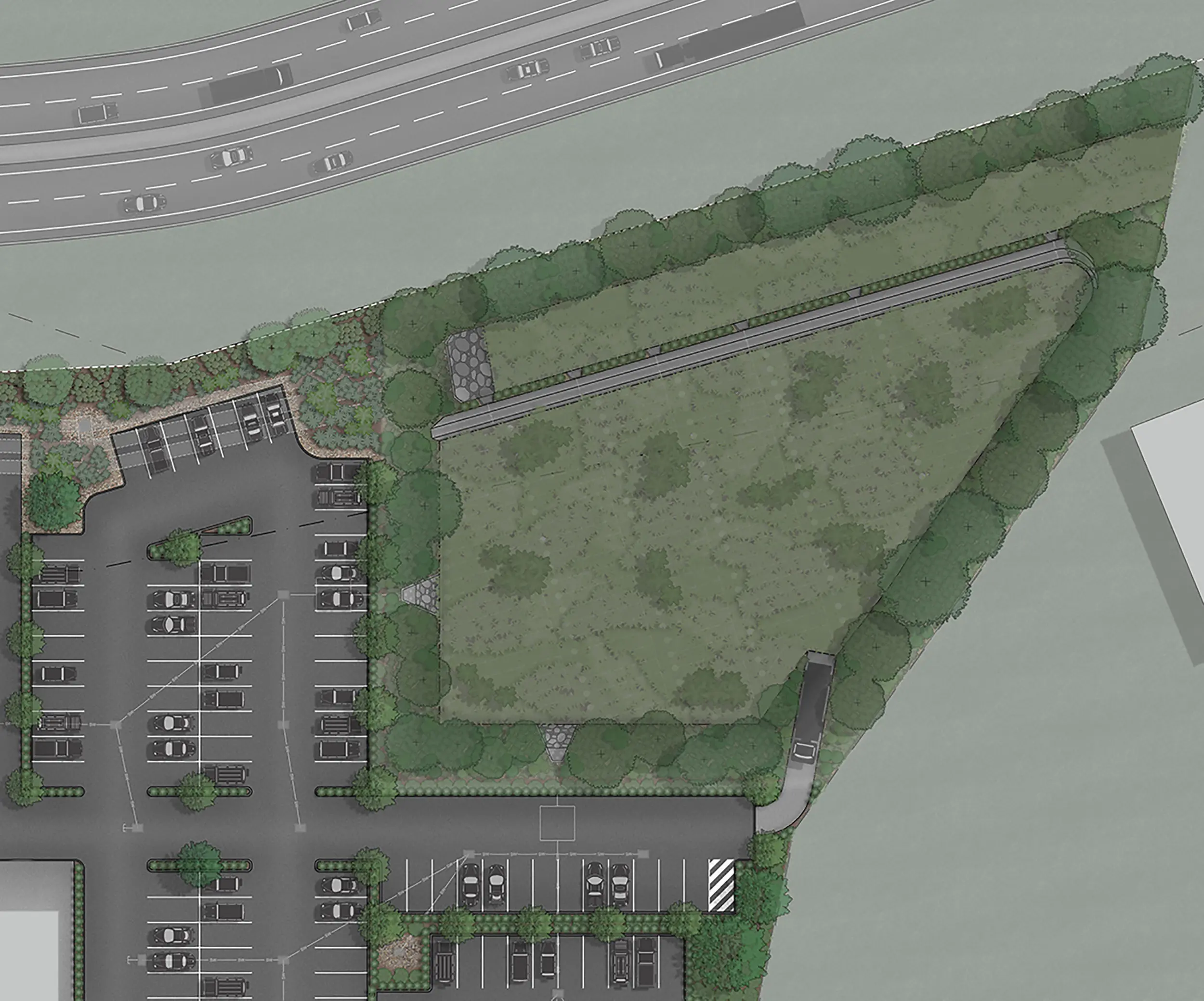
Sustainable Water Management
A range of WSUD strategies have been implemented to optimize water efficiency and storm water management. These include:
- Recycled Water Systems: Class A recycled water is utilized for fire sprinklers, toilet flushing, manufacturing, and irrigation.
- Potable Water Conservation: Design minimizes reliance on potable water sources.
- Stormwater Retention: On-site detention slows runoff, reducing erosion and improving infiltration.
- Permeable Landscape Design: Stormwater is absorbed and retained in the soil to support plant growth.
- Sustainable Materials: Crushed recycled materials are used where possible to reduce environmental impact.
- riple Reticulation System: A three-tiered water supply network ensures efficient distribution of potable, non-potable, and recycled water.
- Water-Efficient Infrastructure: High-efficiency irrigation, outlets, and appliances optimize water use.
Bioretention and Vegetation for Filtration
Strategic planting plays a vital role in enhancing storm water management throughout the site. Bioretention basins are designed with native grasses that naturally filter storm water, improving water quality before it infiltrates into the ground. To further stabilize the landscape, trees and shrubs have been integrated along the basin and swale batters, reinforcing soil stability while blending the system into the surrounding environment.
Erosion control measures have been implemented along major drainage channels, with carefully selected vegetation helping to manage water flow and prevent soil loss. Additionally, a native planting strategy ensures ecological continuity by incorporating local species, strengthening existing vegetation communities and fostering a resilient, sustainable landscape.