Landscape as a Connection to Country
Toyota Automated Distribution Centre
Crestmead | Queensland | Australia

project team
Client | Goodman Group
Client | Toyota Motor Corporation
Builder | De Luca
Shire | Logan City Council
Sustainable Landscape Design for Logistics
Toyota Motor Corporation’s new automated distribution facility at Green Road, Crestmead, presented an opportunity to create a landscape that supports a high-performance industrial environment while responding to Country, environmental sustainability and employee wellbeing.
Citicene Landscape Architects were engaged by Goodman to provide landscape architecture services for the 33,452m² logistics facility, working collaboratively with the broader consultant team from concept design through to construction.
Reflecting Country Through Landscape
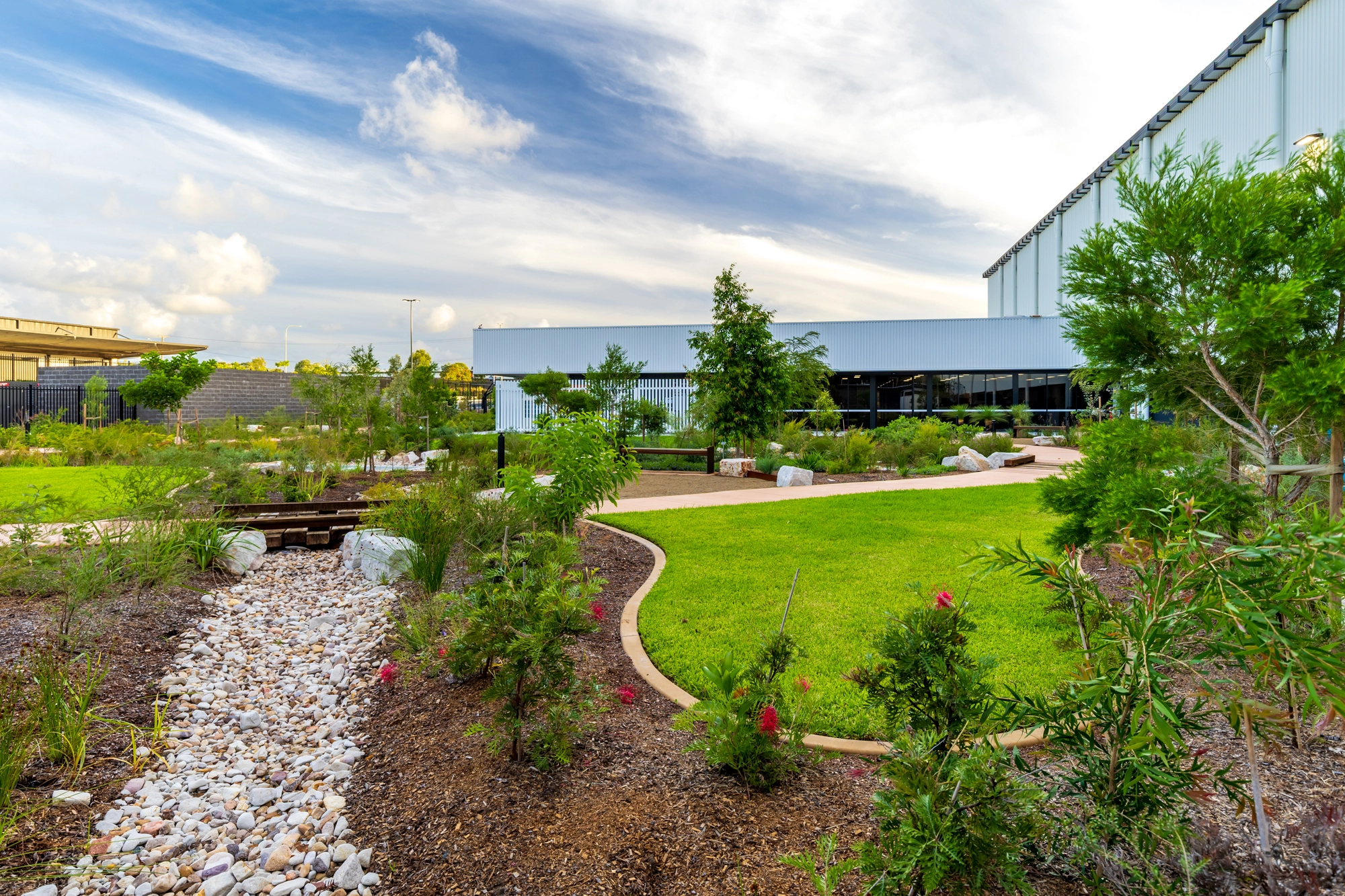
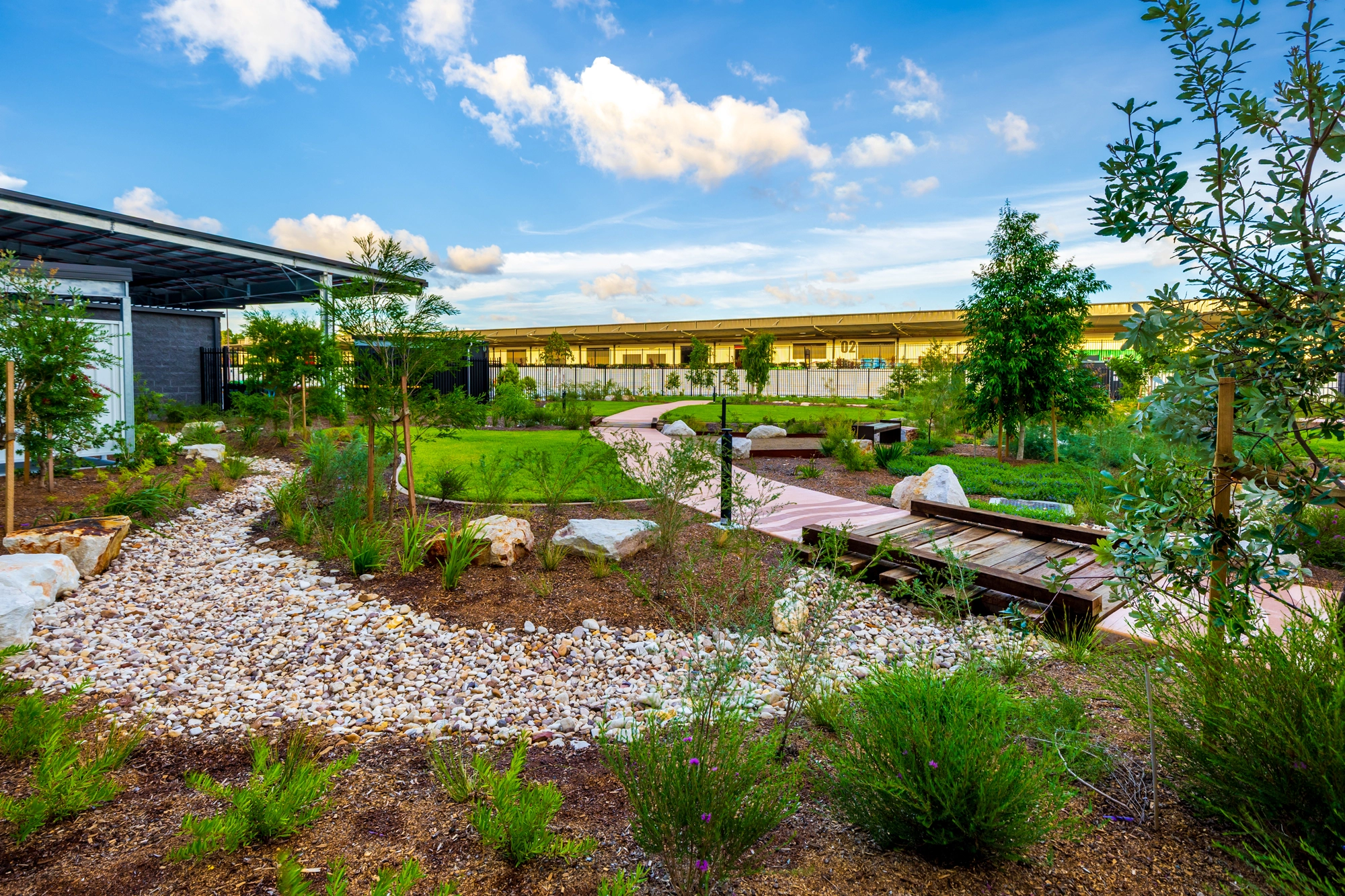
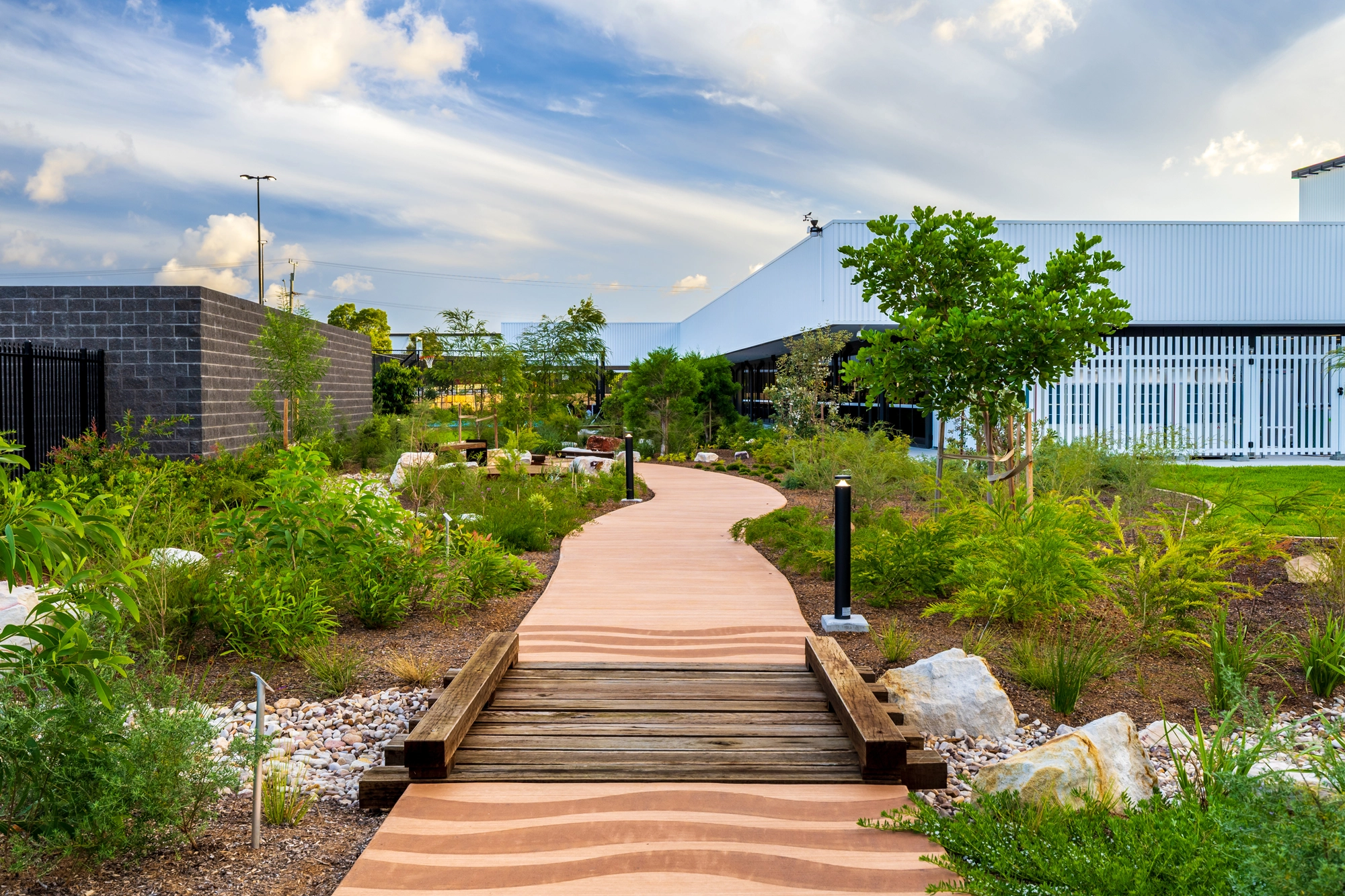
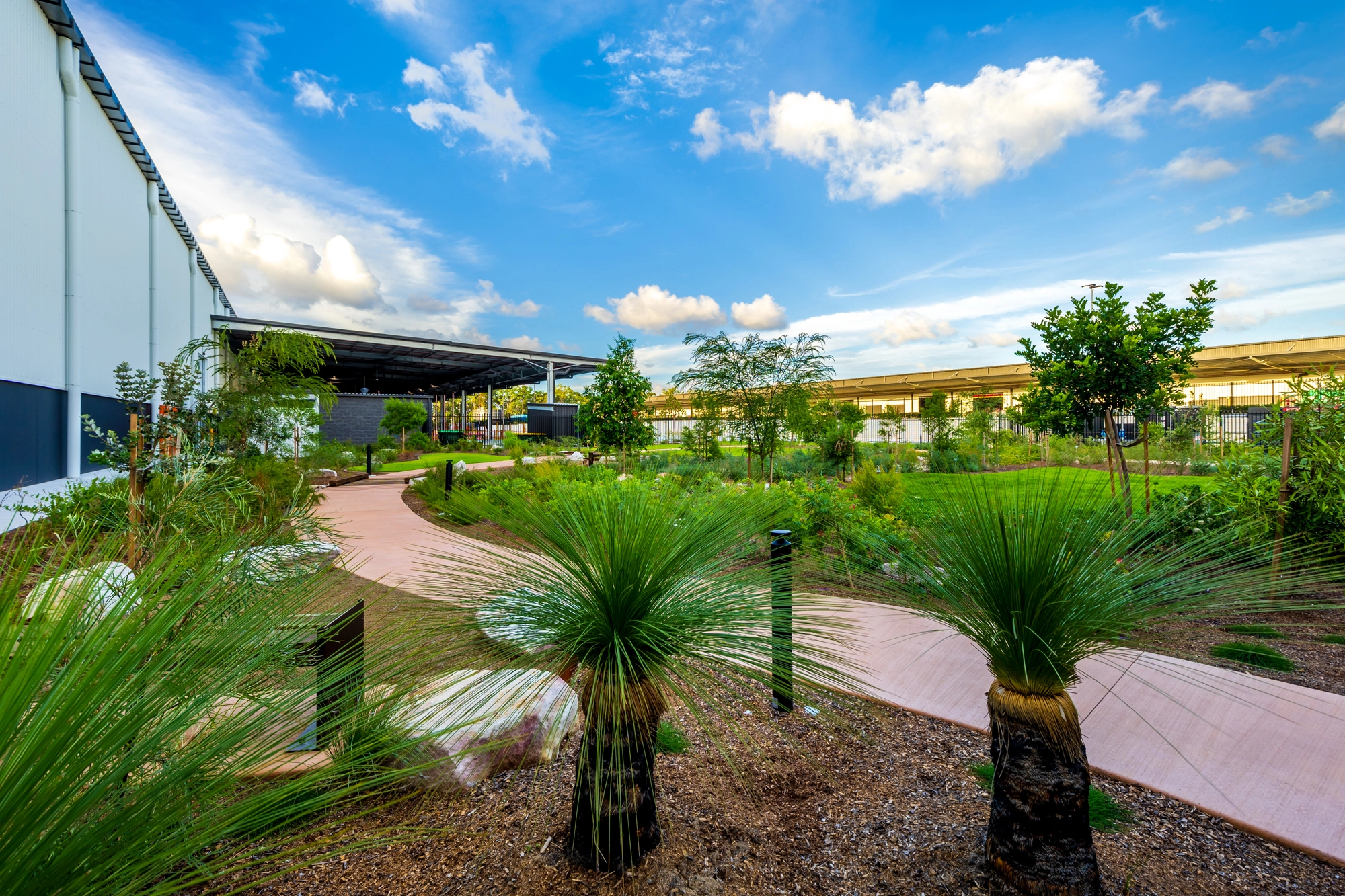
The landscape design acknowledges the cultural significance of Country through a meandering pedestrian pathway and complementary vegetated swale, drawing inspiration from the form and movement of the nearby Logan River.
These landscape elements reference the river’s importance as a traditional food source and transport corridor for the area’s First Nations peoples, creating a subtle design narrative that connects the site to its natural and cultural history.
Connecting Ecology, Place and Workplace
A robust palette of native and drought-tolerant species, selected for local provenance and cultural significance, provides long-term resilience, reduces water demand and establishes a strong sense of place within the industrial precinct.
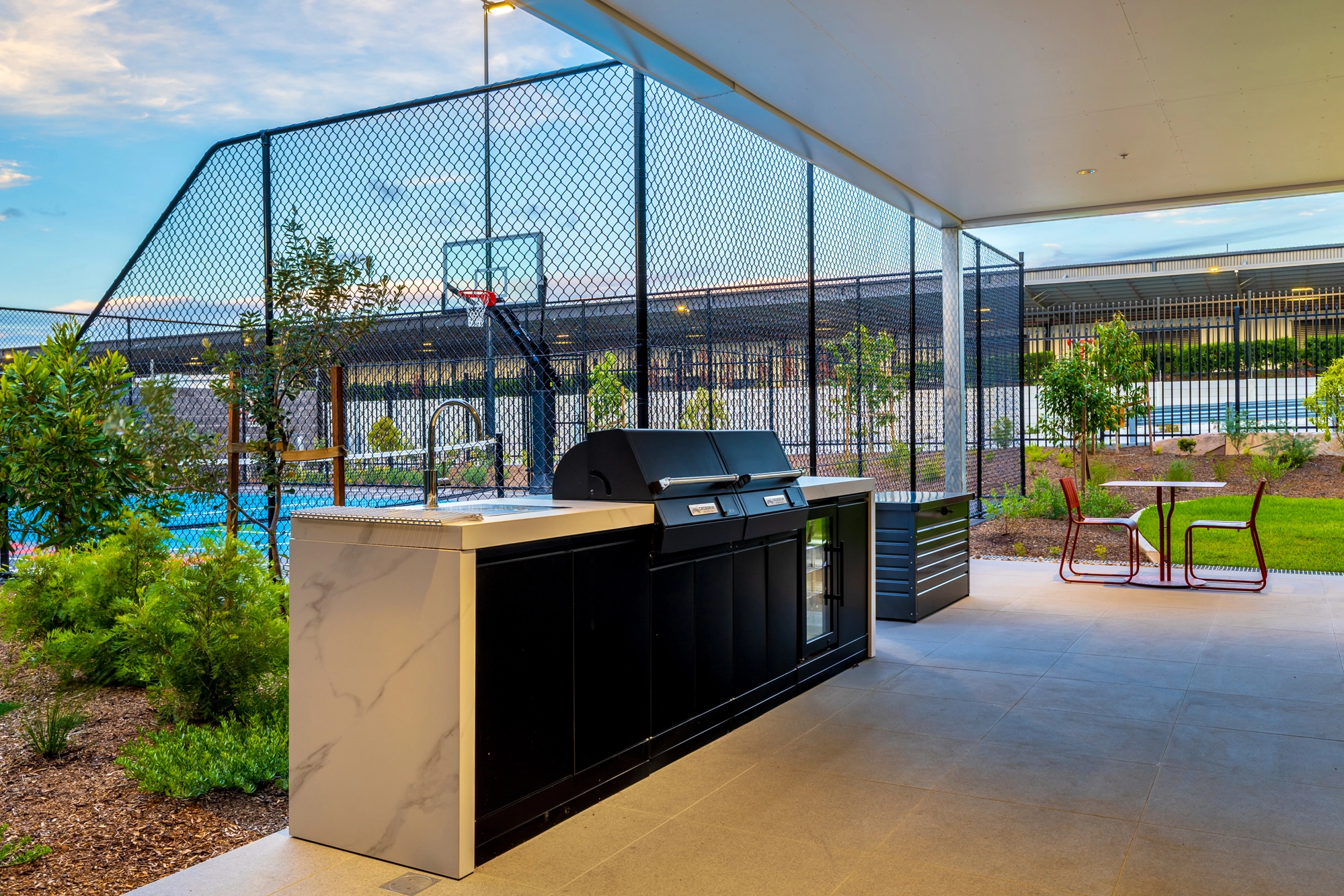
The landscape integrates streetscape planting, building interface treatments, staff outdoor spaces and perimeter landscape zones, enhancing the workplace environment while responding to the operational requirements of a major logistics facility.

Integrating Sustainability, Ecology and Amenity
The landscape design contributes to the facility’s broader sustainability objectives, complementing initiatives including renewable energy generation, electric vehicle infrastructure and Green Star performance targets.
The completed landscape enhances biodiversity, strengthens the visual character of the development and provides shade, comfort and amenity for staff and visitors. Together, these outcomes demonstrate how landscape architecture can integrate cultural, ecological and functional outcomes within a high-performance industrial environment.