
A Sustainable Landscape Aligned with Eco-Friendly Goals
Bapcor Distribution Centre
Redbank | Queensland | Australia

project team
Client | Goodman
Architect | Sparc Architects
Builder | DeLuca
Shire | Ipswich City Council
sustainable landscape solutions
The Bapcor Distribution Centre, a 44,000 sqm facility in Goodman’s Redbank Estate west of Brisbane, streamlines Bapcor’s supply chain into a single, modern, and sustainable hub. Designed for operational efficiency and environmental responsibility, the centre integrates sustainable landscape solutions.
Citicene delivered end-to-end landscape architectural services, showcasing a strong commitment to environmental stewardship. The design features indigenous flora to enhance the local ecosystem, support biodiversity, and create a seamless connection between the facility and its natural surroundings.
a living landmark
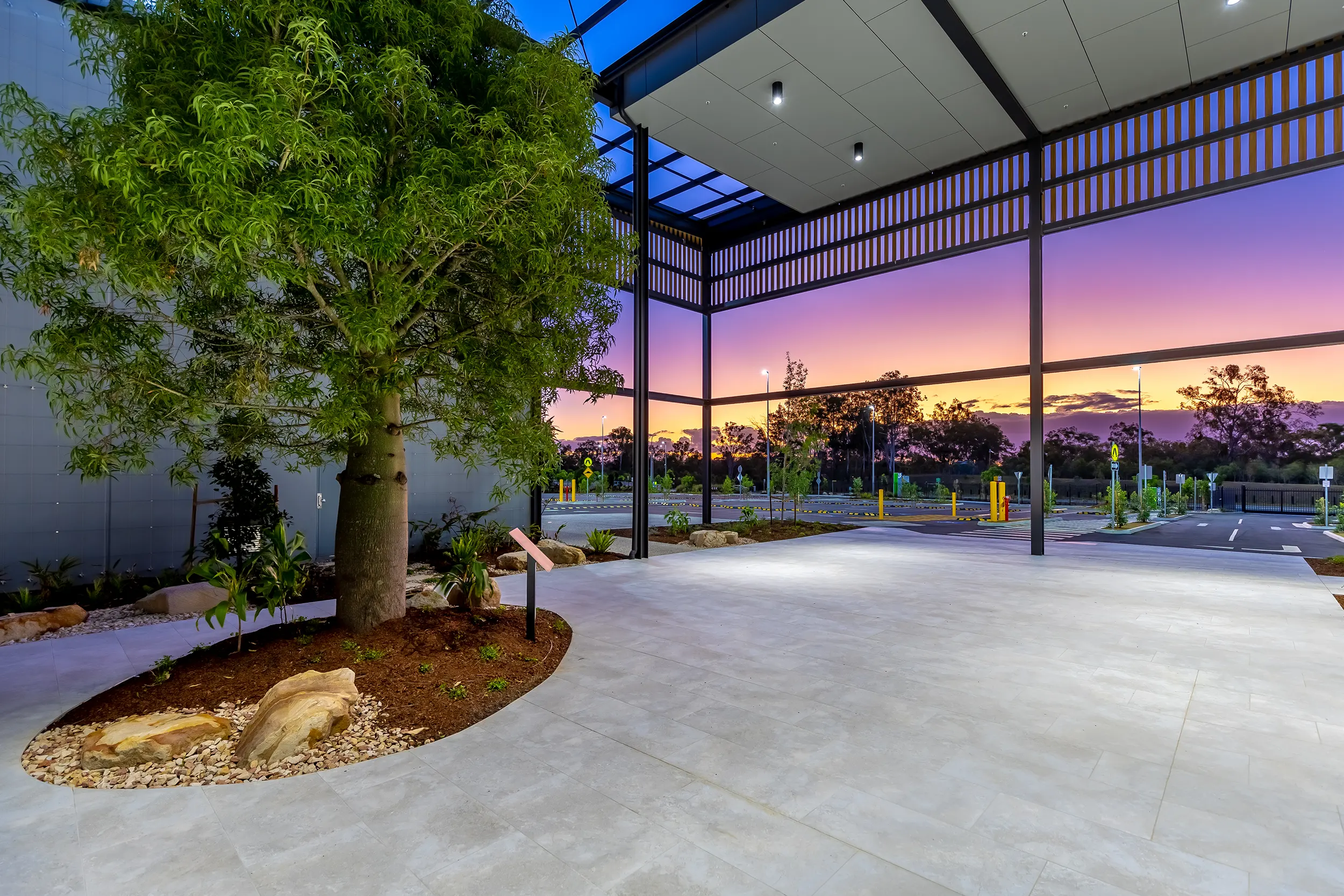
A key highlight of the landscape is a striking ex-ground Bottle Tree (Brachychiton rupestris), which serves as a focal point at the building’s forecourt. This iconic Australian native enhances the site’s character, bringing a sense of natural grandeur with its distinctive, sculptural form.
Complementing this feature, the landscape design includes full-height green wall trellises on various facades, a diverse selection of drought-tolerant native species, and a natural, low-maintenance planting palette – ensuring both aesthetic appeal and sustainability.

vertical greenery – towering trellis
A defining feature of the building’s exterior is the series of towering trellises that extend from the ground to the roofline, creating a striking vertical green element. These expansive structures are adorned with Wonga Wonga Vine (Pandorea pandorana), a vigorous native climber renowned for its dense foliage and clusters of delicate, trumpet-shaped flowers.
As the vines mature, they form a lush, living facade that softens the building’s industrial aesthetic, enhances biodiversity, and contributes to passive cooling. This large-scale green installation reinforces the project’s commitment to sustainability while seamlessly integrating the built environment with the natural landscape.

embracing the Australian bush – a natural landscape of native flora
The landscape design embraces an Australian native species theme, with plants positioned in a natural, seemingly random arrangement to evoke the wild beauty of the Australian bush. Prominent species such as Coastal Banksia (Banksia integrifolia) and Narrow-leaved Palm Lily (Cordyline petiolaris) add height and structure, while Bird’s Nest Fern (Asplenium australasicum) brings a lush, tropical touch to shaded areas.
The vibrant Thyme Honey Myrtle (Melaleuca thymifolia) introduces bursts of colour with its soft pink flowers, and Big Red Kangaroo Paw (Anigozanthos Sp.) offers striking red blooms, further enhancing the landscape’s wild, native character. This eclectic planting arrangement not only reflects the diverse beauty of Australia’s flora but also fosters a sense of harmony between the built environment and its natural surroundings.

active spaces – creating a dynamic and sustainable environment
The outdoor space features a half-sized basketball court, providing a dynamic recreational area for team use and fostering an active, social environment. Surrounding the court, long, integrated seating is seamlessly built into the external retaining walls, offering ample space for relaxation and informal gatherings. The landscape is enriched with Grass Trees (Xanthorrhoea spp.), strategically positioned on mounded areas to create visual interest and enhance the native character of the site.
Throughout the development, the diverse selection of native plant species contributes to a resilient and low-maintenance environment. Additionally, rock-lined sandstone swales have been incorporated to naturally direct water flow, aiding in storm water management while reinforcing the site’s connection to the local landscape.
the growing importance of landscape strategies in industrial property development
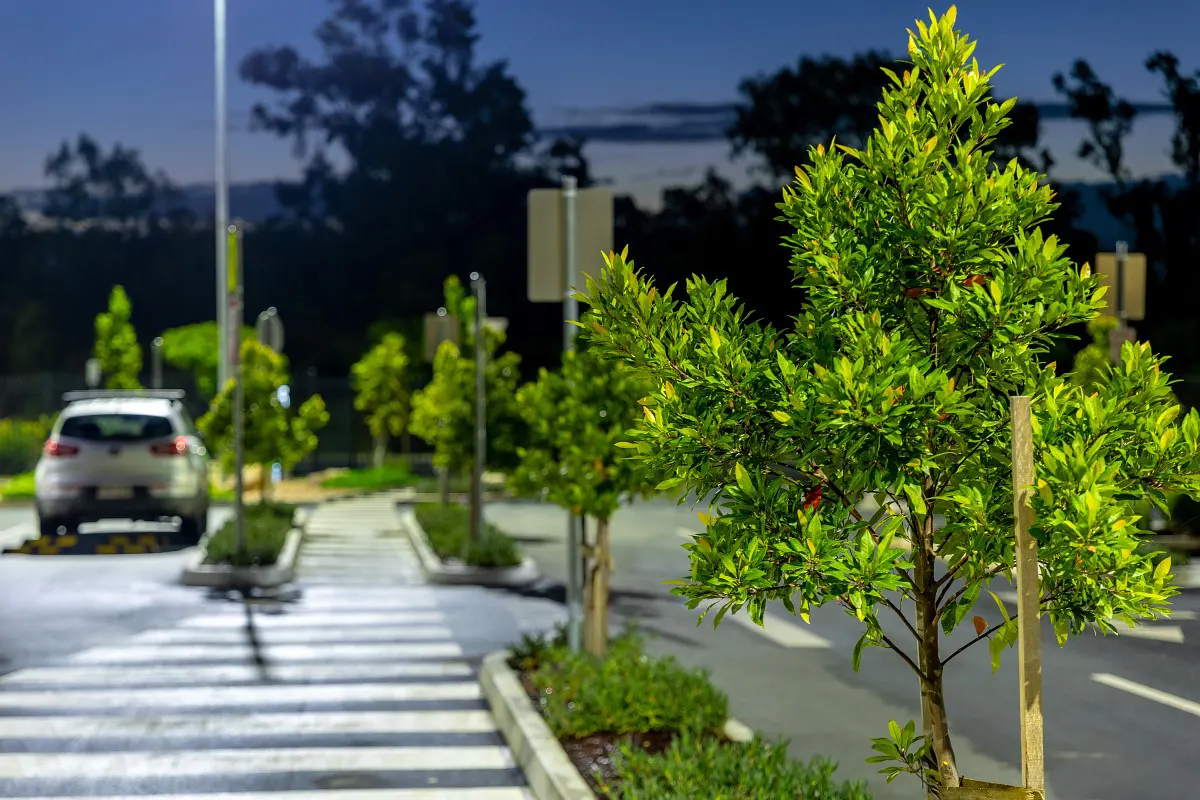
With growing demand for high-quality industrial spaces near city centres, the property market increasingly values robust landscape strategies. Such strategies are crucial for enhancing and protecting the environment, reducing the urban heat island effect, and improving employee well-being.