
Shaping Healthy, Thriving Communities
Summit Community
Bridgeman Downs | Brisbane | Queensland | Australia

the impact of landscape on community well-being
A well-designed landscape is far more than a visual asset – it plays a vital role in the health, functionality, and long-term success of a community. Thoughtful landscape planning not only enhances the environment but also promotes sustainable living, creating spaces that improve the quality of life for residents.
In residential developments, landscape design should be integrated from the very beginning – not as an afterthought. When carefully planned, outdoor environments foster clean, safe, and engaging spaces that encourage social interaction, improve mental and physical well-being, and contribute long-term value to the community.

designing for people’s needs
Effective landscape design must consider the needs of the people who will use it. This includes providing spaces and facilities that promote health and well-being. Open-air spaces, pocket parks, and walking paths all contribute to a healthy environment, encouraging outdoor activity and relaxation. These spaces not only support physical health but also create social opportunities and a sense of community.
Creating a “sense of place” means that the physical characteristics of a location influence how people feel about it. The design elements incorporated into the space define its atmosphere, and individuals react to it differently based on their perspectives and experiences. This development aims to encourage active, healthy living while fostering a sense of belonging, identity, and connection to the local context.

designed for the environment
Environmental protection and enhancement were core priorities in this development. Sustainable landscape planning addresses critical elements like water, fauna, and flora to ensure ecological balance.
A significant part of the project involved managing overland flow and stormwater across the site. Rain gardens in the streetscape capture and filter stormwater before it enters the stormwater system. This approach supports healthy ecosystems and promotes sustainable water management, enhancing the community’s overall environmental health.
In addition to water management, retaining and protecting significant vegetation was essential. The area’s character is defined by mature Hoop Pine and Eucalypt trees. Preserving and protecting these trees ensured the development maintained its natural character and environmental integrity.
landscape design elements for this project
Key design features incorporated into this project include:
- footpaths for walking and cycling
- dry creek bed rockeries and swales
- retention of significant trees
- stormwater filtration through water sensitive urban design
- rain gardens to the streetscape
- indigenous species and plant selection as compensatory planting to assist in strengthening the existing environment
- protected tree easements
- low maintenance entry retaining and signage walls.
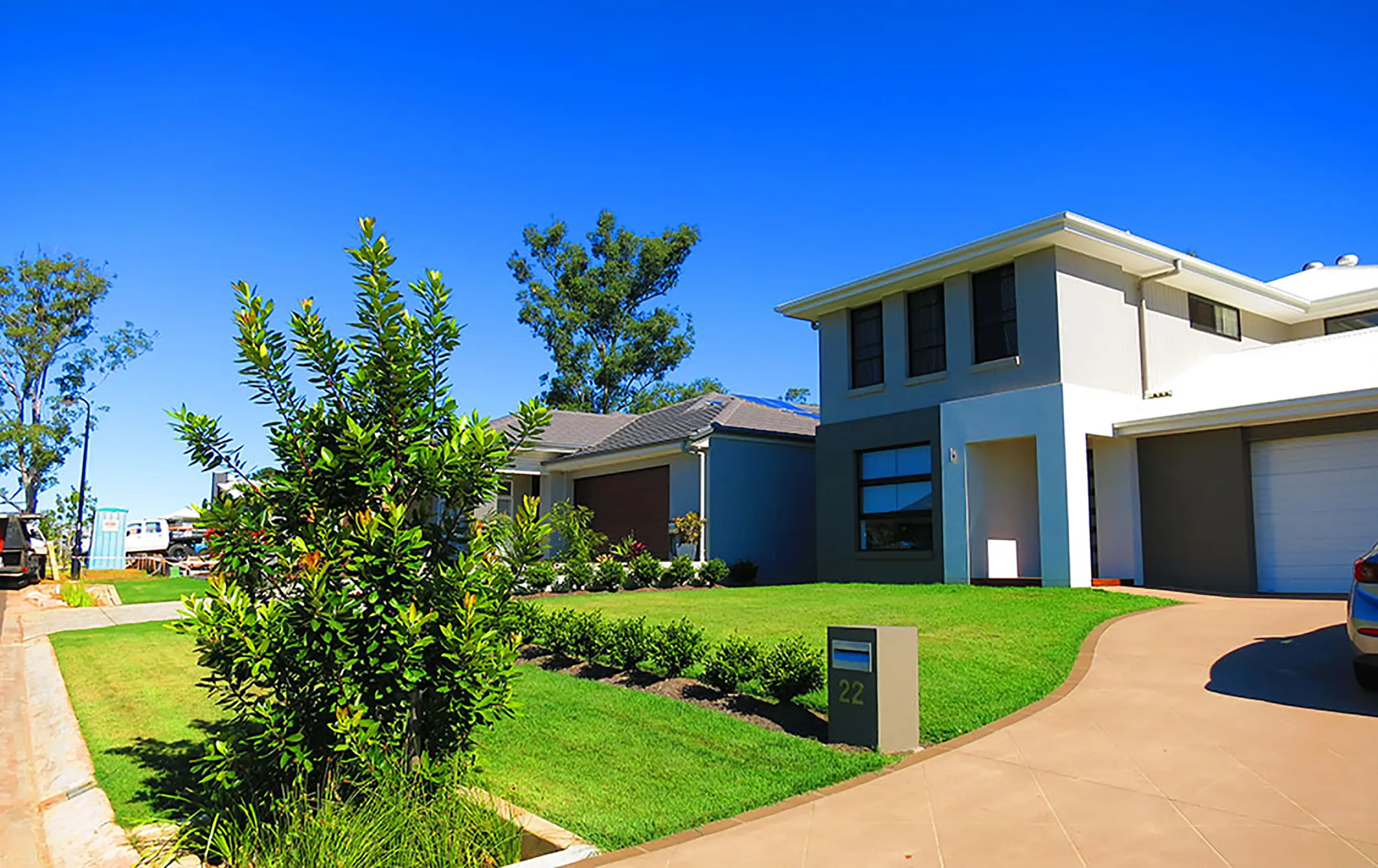
landscape character – form, colour, texture, shape, space
Creating a landscape character involves the careful consideration of various physical elements, including form, colour, texture, shape, and space – both positive and negative – as well as dominance and emphasis. These elements, in combination with infrastructure requirements and Local Authority guidelines, help create an attractive and functional environment that enhances amenity.
The design of the front acoustic fence, which faces a busy road, required more than just meeting acoustic requirements. Given its prominent position, a standard acoustic barrier would not suffice. A custom design was needed to ensure the fence met acoustic standards while contributing positively to the site’s entry design.
The final result combined signage, feature posts, concrete sleeper retaining walls, and vegetation, creating a visually appealing and acoustically effective entrance. The linear form and simple, cost-effective design used standard materials and finishes, while choosing a quality fence builder who paid attention to detail ensured the entry matched the vision for the site.